
Best lmsproject.com Alternatives for US Organizations in 2026
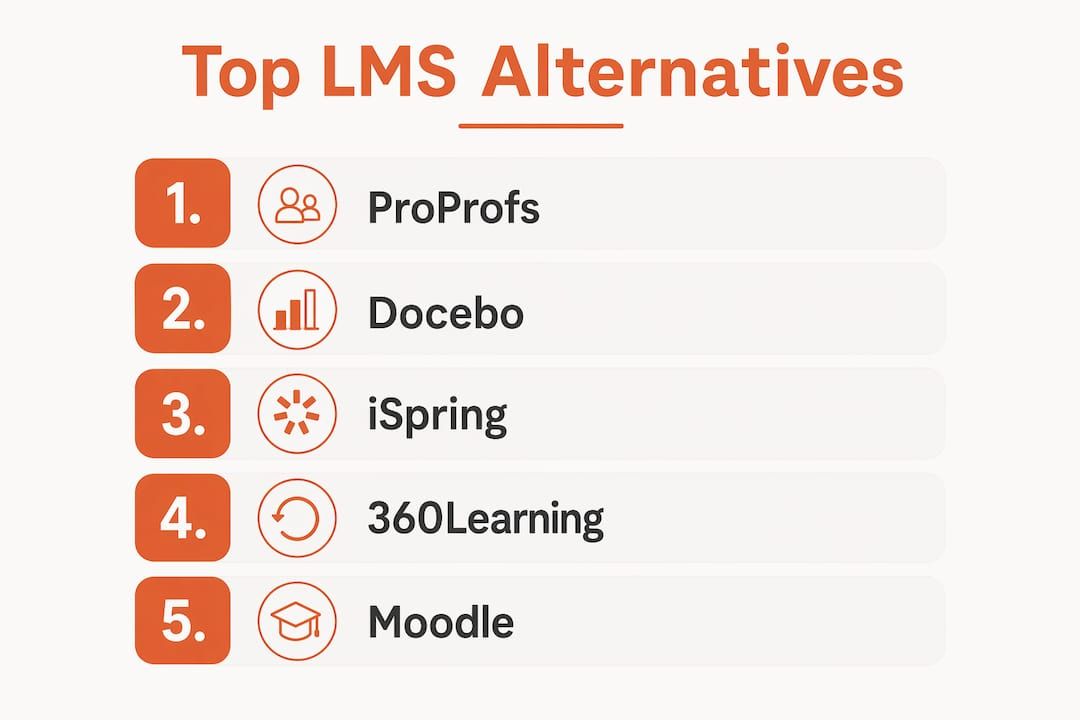
The strongest lmsproject.com alternatives available to US organizations right now are ProProfs Training Maker, TalentLMS, Docebo, iSpring Learn, Moodle, and Absorb LMS. Each one covers a different slice of the market, from small contractors needing fast onboarding to large enterprises managing compliance across multiple sites. Here is a quick orientation before the full comparison:
- ProProfs Training Maker — starts at $1.99/learner/month; best for small to mid-sized teams needing quick setup and mobile access
- TalentLMS — cloud-based with gamification; best for rapid deployment at small to mid-sized businesses
- Docebo — enterprise-grade with compliance automation; custom pricing
- iSpring Learn — PowerPoint-native content creation; has transparent pricing appealing to teams using PowerPoint for training
- Moodle / Moodle LMS — open-source and free to host; best for organizations with technical resources
- Absorb LMS — built for regulated industries; custom pricing
- 360Learning — peer-to-peer collaborative learning; starts at $8/user/month
- Blackboard Learn — community and collaboration focus; best for educational institutions
- Brightspace — adaptive learning paths; best for education and corporate sectors
- LearnUpon — blended learning with strong support; custom pricing
- Litmos — large off-the-shelf course library; custom pricing
- Rippling LMS — HR and payroll integration; custom pricing
- SkyPrep — simple onboarding focus; best for small and mid-sized businesses
- WorkRamp — analytics-heavy enterprise training; custom pricing
- GoSkills — microlearning for fast upskilling; subscription-based
- Skilljar — customer education and certification; custom pricing
- Kajabi — course creation plus marketing tools; subscription-based
- Teachable — course sales for entrepreneurs; subscription-based
- Thinkific — branded course delivery; subscription-based
- Mighty Networks — community plus courses; subscription-based
- Arlo Training Management Software — instructor-led training scheduling; custom pricing
- Thrive — employee growth and engagement; custom pricing
- RiseUp — competency-based training paths; custom pricing
What are the best lmsproject.com alternatives in 2026?
Every platform below is available to US organizations. Pricing is listed where publicly published.

| Platform | Best For | Key Features | Pricing | Mobile/Offline |
|---|---|---|---|---|
| ProProfs Training Maker | Small/mid-sized orgs, onboarding | Course builder, compliance tracking, reporting | From $1.99/learner/mo | Yes / Yes |
| TalentLMS | Rapid deployment, SMBs | Gamification, simple UI, SCORM support | Tiered plans | Yes / Limited |
| Docebo | Enterprise, complex compliance | AI-powered automation, multi-audience | Custom | Yes / Limited |
| iSpring Learn | Content-heavy training | PowerPoint integration, SCORM, quizzes | From $3.70/user/mo | Yes / Yes |
| Moodle LMS | Customizable open-source | Plugins, community support, self-hosted | Free (hosting costs vary) | Yes / Yes |
| Absorb LMS | Regulated industries | Compliance tools, wide integrations | Custom | Yes / Limited |
| 360Learning | Collaborative learning | Peer authoring, social features | From $8/user/mo | Yes / No |
| Blackboard Learn | Education, social learning | Collaboration tools, community features | Custom | Yes / Limited |
| Brightspace | Adaptive learning | Personalized paths, analytics | Custom | Yes / Limited |
| LearnUpon | Blended corporate training | Portals, integrations, strong support | Custom | Yes / No |
| Litmos | Off-the-shelf content | Course library, compliance readiness | Custom | Yes / No |
| Rippling LMS | HR-integrated training | Payroll/HR sync, automated assignments | Custom | Yes / Limited |
| SkyPrep | Simple onboarding | Clean UI, onboarding workflows | Tiered plans | Yes / Limited |
| WorkRamp | Enterprise analytics | Content management, reporting | Custom | Yes / Limited |
| GoSkills | Fast employee upskilling | Bite-sized courses, progress tracking | Subscription | Yes / Limited |
| Skilljar | Customer education | Certification, customer onboarding | Custom | Yes / No |
| Kajabi | Course monetization | Marketing tools, course builder | Subscription | Yes / Limited |
| Teachable | Course sales | Simple builder, payment processing | Subscription | Yes / No |
| Thinkific | Branded course delivery | Custom branding, diverse formats | Tiered plans | Yes / Limited |
| Mighty Networks | Community plus learning | Social network, course integration | Subscription | Yes / No |
| Arlo Training Management Software | Instructor-led training | Scheduling, virtual/in-person delivery | Custom | Yes / Limited |
| Thrive | Employee growth | Engagement analytics, skills tracking | Custom | Yes / Limited |
| RiseUp | Competency-based training | Adaptive paths, skills mapping | Custom | Yes / Limited |
| Skilljar | Customer success training | Certifications, customer portals | Custom | Yes / No |
ProProfs Training Maker stands out for organizations that need to get training running fast. The platform implements in 30–60 days on average, supports offline access, and covers compliance tracking at a price point most small teams can absorb without a budget conversation.
Docebo sits at the other end of the spectrum. It handles multi-audience training, automates compliance workflows, and scales across large organizations with diverse learning needs. Pricing is custom and negotiated, which suits enterprise procurement cycles.

iSpring Learn earns its place for teams that already build training in PowerPoint. The integration is direct, the pricing is transparent at $3.70/user/month, and offline access means field workers are not dependent on a Wi-Fi connection.
360Learning takes a different approach entirely. Rather than top-down course delivery, it encourages peer authoring and social learning, which works well for organizations where subject-matter experts are scattered across departments. pricing is positioned towards peer-authoring and social learning organizations.
Moodle and Moodle LMS are effectively the same open-source platform. The distinction matters mainly for procurement: self-hosted Moodle is free but requires IT resources, while managed Moodle hosting adds cost. Either way, the plugin ecosystem is the deepest of any platform on this list.
Rippling LMS is worth a look if your organization already uses Rippling for HR and payroll. Training assignments can be automated based on employee role or department, which removes a significant administrative burden.
How to choose the right LMS alternative for your organization
Matching features to your use case is the single most reliable predictor of LMS success. A platform that works well for a 500-person corporate training team may be completely wrong for a 30-person construction crew working across three job sites.
Start with these criteria:
- Organization size: Small teams (under 50 people) need fast setup, affordable per-learner pricing, and minimal IT overhead. ProProfs Training Maker and iSpring Learn both fit that profile. Larger organizations with complex compliance requirements are better served by Docebo, Absorb LMS, or WorkRamp.
- Training type: Instructor-led programs need scheduling and delivery tools, which is exactly what Arlo Training Management Software is built for. Self-paced eLearning favors platforms like TalentLMS or SkyPrep.
- Compliance requirements: Regulated industries, including construction, healthcare, and manufacturing, need automated compliance tracking and audit-ready reporting. Litmos, Absorb LMS, and LearnUpon all cover this well.
- Mobile and offline access: For field workers without reliable internet, offline capability is not optional. ProProfs Training Maker and iSpring Learn both support offline training delivery.
- Integration needs: If your team runs on Procore, QuickBooks, BambooHR, or Rippling, check integration compatibility before committing to any platform.
- Reporting depth: WorkRamp and Brightspace offer detailed analytics. GoSkills keeps reporting simple. Match the depth to what your managers will actually use.
Pro Tip: Run a 60–90-day pilot with a defined use case and a clear adoption plan before signing a long-term contract. Platforms that look identical on a feature checklist often feel very different once real users are inside them.
The shift toward proof-based training is also worth factoring in. Organizations are moving away from tracking attendance and toward verifying that workers actually understood the material. Platforms that support assessments, certifications, and competency verification give you that evidence.
Research insights on LMS selection for construction and specialized industries
Construction organizations face a specific set of requirements that generic LMS comparisons often miss. Mobile-friendly and offline training are essential for crews working on job sites without reliable connectivity. Compliance tracking tied to OSHA standards, safety certifications, and continuing education adds another layer of complexity.
The table below summarizes how key criteria map to organization type in construction and similar field-based industries:
| Criteria | Small Contractor (under 50) | Mid-Market (50–500) | Enterprise (500+) |
|---|---|---|---|
| Mobile/offline access | Critical | Critical | Important |
| Compliance tracking | Required | Required | Required |
| Ease of setup | High priority | Medium priority | Lower priority |
| Custom integrations | Rarely needed | Often needed | Always needed |
| Per-learner pricing | Preferred | Negotiable | Custom contracts |
| Trade-specific content | Preferred | Preferred | Varies |
Trade-specific course content developed by experienced industry professionals consistently outperforms generic compliance material. Workers retain more when training reflects actual job-site conditions rather than abstract regulatory language.
Microlearning delivered via mobile also improves completion rates for field workers. Short, focused modules that workers can complete between tasks, and certify on their phones, fit the rhythm of construction work far better than hour-long desktop courses.
Key insight: For construction organizations, the combination of offline access, mobile microlearning, and proof-based certification tracking is the baseline requirement, not a premium feature.
How does customer support compare across these LMS platforms?
Support quality varies considerably, and it often becomes the deciding factor after a platform is already deployed.
LearnUpon is consistently noted for strong customer support, with dedicated success managers available on higher-tier plans. Absorb LMS and Docebo both offer enterprise-level support structures, including onboarding assistance and ongoing account management. For organizations without internal LMS administrators, that kind of hands-on support is worth paying for.
ProProfs Training Maker offers unlimited admin and learner support across its plans, which is unusual at its price point. TalentLMS provides email and chat support, with phone support available on higher tiers. SkyPrep is known for responsive support that suits smaller teams who need quick answers without navigating a large support organization.
Platforms like Moodle rely primarily on community forums and third-party hosting partners for support. That works well for organizations with technical staff, but it can be a bottleneck for teams that need fast resolution of training delivery issues.
Kajabi, Teachable, and Thinkific are built for individual course creators, so their support models reflect that. They offer solid documentation and community resources, but enterprise-level service agreements are not part of their standard offering.
How long does implementation take for each LMS alternative?
Implementation timelines range from a few days to several months, depending on the platform and the complexity of your training program.
ProProfs Training Maker and iSpring Learn both implement in 30–60 days on average for organizations with straightforward content needs. TalentLMS and SkyPrep are designed for fast deployment, with basic configurations often running in under a week.
Docebo, WorkRamp, and Absorb LMS typically require longer implementation cycles, often 60–90 days or more, because they involve deeper integrations, custom configurations, and multi-department rollouts. The complexity is justified for large organizations, but smaller teams should weigh whether that timeline fits their needs.
Moodle requires the most technical setup of any platform on this list. Self-hosted deployments can take weeks to configure properly, especially when adding plugins and custom themes. Managed Moodle hosting reduces that burden significantly.
Platforms like Kajabi, Teachable, and Thinkific are the fastest to launch. A course creator can have content live within hours. The tradeoff is that they lack the compliance infrastructure and reporting depth that most organizations need.
What do real users say about these LMS platforms?
User feedback on platforms like G2 surfaces consistent patterns across the top alternatives.
360Learning users on G2 highlight the peer authoring tools and the speed at which subject-matter experts can contribute content. The social learning features get strong marks, though some users note that the platform requires active community management to deliver its full value.
Litmos reviewers on G2 frequently cite the off-the-shelf course library as the primary reason for choosing it. Compliance-heavy industries appreciate the pre-built safety and regulatory content. Some users flag that customization options are more limited than on open platforms like Moodle.
iSpring Learn earns consistent praise on G2 for its PowerPoint integration and ease of content creation. Organizations that already have training materials built in PowerPoint can migrate and publish quickly without rebuilding from scratch.
Skilljar reviews on G2 focus on its customer education use case. Companies using it for product onboarding and customer certification report strong results, particularly when tracking customer progress through structured learning paths.
Rippling users on G2 consistently point to the HR integration as the standout feature. Automated training assignments triggered by onboarding workflows save administrators meaningful time each week.
Blackboard Learn feedback on G2 reflects its educational institution roots. Collaboration tools and community features are well-regarded, though corporate users sometimes find the interface less intuitive than newer platforms.
Waiverpilotpro handles the paperwork while your LMS handles the training
If you are managing construction crews across multiple job sites, you are dealing with two distinct administrative burdens: keeping workers trained and keeping payment documentation in order. The LMS platforms covered here solve the training side well. The lien waiver side is a different problem entirely.
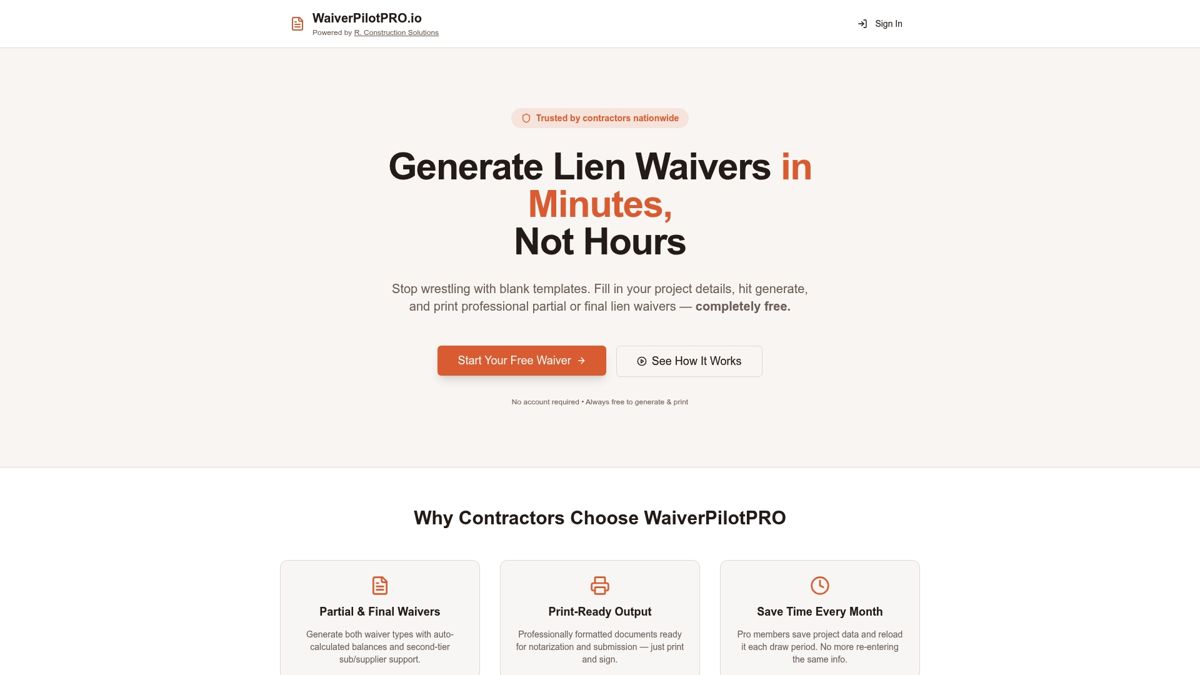
Waiverpilotpro is built specifically for contractors who need to generate conditional and final lien waivers without setting up accounts, navigating complex templates, or paying per document. You fill in the project details, and the platform produces a professional, notarizable waiver ready for submission. It integrates directly with Procore and Buildertrend, so the workflow fits inside the tools your team already uses. Auto-calculated balances and multi-subcontractor support mean you are not manually checking math on every payment cycle. Use the free lien waiver generator to get started at no cost.
Key Takeaways
The best LMS alternative to lmsproject.com depends on your organization’s size, training type, and compliance requirements, with ProProfs Training Maker and iSpring Learn leading for smaller teams and Docebo or Absorb LMS for enterprise needs.
| Point | Details |
|---|---|
| Pricing range | ProProfs Training Maker offers entry-level pricing attractive to small teams; iSpring Learn at $3.70/user/month; 360Learning at $8/user/month. |
| Implementation speed | Fast-deploy platforms like TalentLMS and SkyPrep go live in days; enterprise platforms like Docebo average 60–90 days. |
| Offline access matters | For construction and field-based teams, offline mobile training is a baseline requirement, not a premium add-on. |
| Proof-based training | Platforms with assessment and certification tools verify worker understanding, not just attendance. |
| Waiverpilotpro | Handles lien waiver generation for construction contractors, integrating with Procore and Buildertrend at no cost. |