Lien Period Explained for Subcontractors: 2026 Guide
A mechanics lien period is the legally defined window during which a subcontractor can file a lien against a property to secure payment. Miss that window, and your right to file disappears permanently. No extensions, no second chances. The lien period explained for subcontractors is not a technicality — it is your primary legal tool for getting paid on a construction project. Understanding the deadlines, the preliminary notice rules, and how lien waivers interact with your rights is the difference between collecting what you are owed and writing off the loss.
What is the typical lien period for subcontractors?
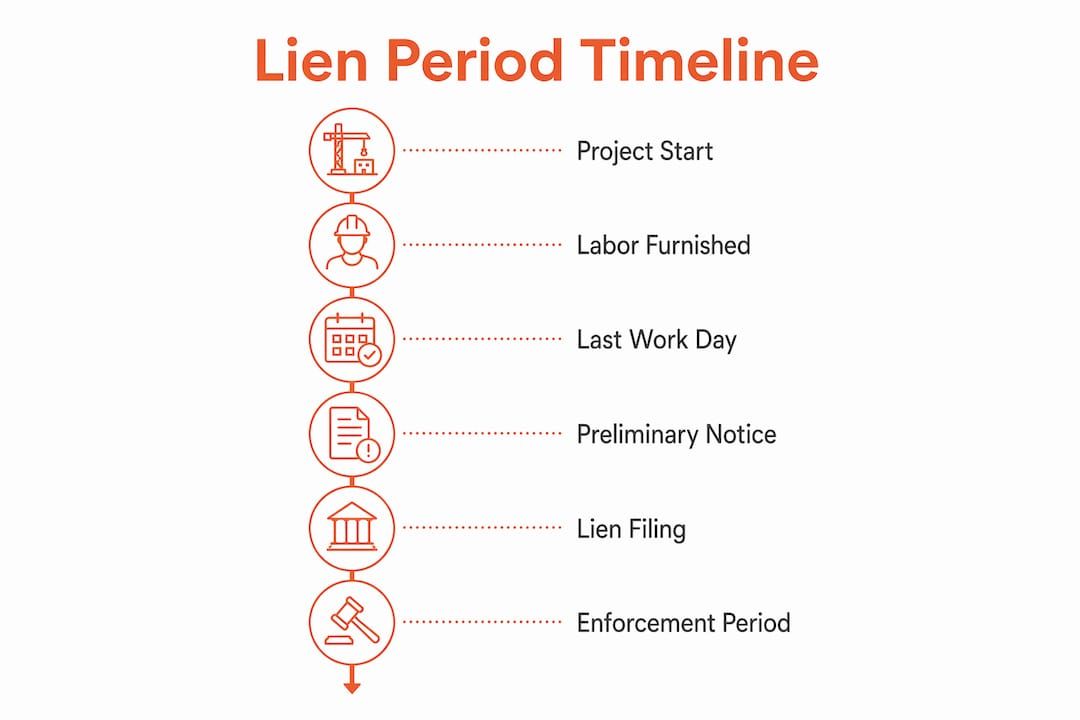
Most states give subcontractors between 60 and 120 days after the last day they furnished labor or materials to file a mechanics lien. That clock starts the moment you stop working on the project, not when the project is complete. Missing it means your lien rights are gone, regardless of how valid your unpaid claim is.
State deadlines vary significantly. Lien periods differ by state — California gives subcontractors 90 days, Texas requires filing by the 15th day of the third month after the last work month, and North Carolina allows 120 days. That variation matters if you work across state lines.

| State | Lien Filing Deadline | Clock Starts From |
|---|---|---|
| California | 90 days | Last day of work |
| Texas | 15th of 3rd month after last work | Last work month |
| Florida | 90 days | Last day of furnishing |
| North Carolina | 120 days | Last day of work |
| New York | 8 months (general); 4 months (single-family) | Last day of work |
Some states measure the lien period from the date of project completion or the recording of a notice of completion, not from your last day on site. That distinction can shorten your window dramatically if you finish work early in a long project.
Pro Tip: Set a calendar reminder the day you finish work on any project. Do not wait for a payment dispute to start tracking your deadline. By then, you may have already lost your window.
What are preliminary notice requirements and why do they matter?
Preliminary notices are written notices that subcontractors must send to the property owner, the general contractor, and sometimes the construction lender before or shortly after starting work. They are not optional in most states. 37 states mandate preliminary notices within a specific window after first furnishing labor or materials. Skipping this step kills your lien rights before you ever file.
The deadlines for these notices are tight:
- California and Arizona: Notice must be sent within 20 days of first furnishing labor or materials.
- Florida: Notice must be sent within 45 days of first furnishing.
- Texas: Subcontractors must send a monthly notice by the 15th of the second month following each unpaid month.
- Washington: Notice must be sent before or within 60 days of first furnishing.
The notice must go to the right parties. Most states require you to notify the property owner and the general contractor. Some states also require notice to the construction lender. If your contract is with a lower-tier subcontractor rather than the GC directly, you may need to notify additional parties up the chain.
Missing preliminary notices permanently forfeits your lien rights in many states, regardless of any other steps you take. That is the harshest consequence in lien law. You can file everything else perfectly and still lose your claim because you missed a 20-day notice window at the start of the job.
Your contract tier also affects your notice obligations. Many states restrict lien rights to subcontractors up to the second tier. If you are a third-tier sub or lower, you may have no lien rights at all, regardless of whether you sent notices on time.
Pro Tip: Send your preliminary notice on day one of the project, not day 19. Sending it early never hurts your rights. Sending it late can end them.
How long do you have to enforce a lien after filing?
Filing a mechanics lien is not the finish line. It is the starting gun for a second, separate deadline. After recording a lien, subcontractors have between 6 months and 2 years to file a foreclosure lawsuit, depending on state law. If you miss that deadline, the lien expires automatically and cannot be revived.
Here is what happens when you record a lien:
- The lien creates a “cloud on title,” meaning the property owner cannot sell or refinance the property without resolving your claim.
- That cloud gives you real negotiating leverage. Most owners want it removed quickly.
- To keep that leverage, you must file a lawsuit to enforce the lien before the foreclosure deadline passes.
- Lien foreclosure deadlines range from 90 days to 2 years post-recording depending on the state.
The cost of filing a lien itself is modest. Recording fees at the county recorder’s office are typically low. The bigger cost comes if you need to pursue foreclosure. Legal counsel is advisable for claims exceeding $15,000, since foreclosure is a formal lawsuit with procedural requirements that vary by state.
One practical reality: most lien disputes settle before foreclosure. The cloud on title creates enough pressure that owners and GCs often negotiate payment rather than let the lawsuit proceed. Your goal is to file accurately and on time so that leverage stays intact.
What common mistakes cause subcontractors to lose lien rights?
The most preventable lien failures come down to paperwork errors and missed deadlines, not the merits of the underlying claim. Errors in legal property descriptions and incorrect owner information are among the leading causes of lien dismissal during foreclosure. A street address is not a legal description. The legal description is the formal parcel identification recorded in county records, and it must appear exactly on your lien document.
Common mistakes that cost subcontractors their lien rights:
- Using a street address instead of the legal property description. Courts have dismissed liens for this error alone.
- Naming the wrong property owner. If the owner of record differs from the person who hired you, your lien may be defective.
- Missing the preliminary notice deadline. Even one day late can void your rights in states like California and Arizona.
- Not verifying your contract tier. Verifying your contract tier before starting work is the single most critical step in preserving lien eligibility.
- Waiting too long to file. Subcontractors often assume they have more time than they do, especially when working across multiple states with different deadlines.
Pro Tip: Pull the legal property description from the county assessor’s website or the title report before you file. Do not copy it from the contract or the permit. Those documents sometimes contain errors.
How can subcontractors manage lien waivers during the lien period?
A lien waiver is a document where you agree to release some or all of your lien rights in exchange for payment. Think of it as a receipt that also surrenders a legal remedy. Understanding lien waiver types is critical because signing the wrong one at the wrong time can eliminate your rights before you are actually paid.
| Waiver Type | When to Use | Key Risk |
|---|---|---|
| Conditional progress waiver | With each draw payment request | Safe — rights release only when payment clears |
| Unconditional progress waiver | After payment has fully cleared | Risky if signed before funds clear |
| Conditional final waiver | With final payment request | Safe — protects until final check clears |
| Unconditional final waiver | After all payments confirmed received | Permanently ends all lien rights |
Conditional lien waivers release your lien rights only when the payment actually clears. That conditionality is your protection. If the check bounces or the wire never arrives, your lien rights remain intact. Unconditional waivers release your rights immediately upon signing, regardless of whether payment arrives.
Use a conditional waiver with every draw payment. Switch to an unconditional waiver only after you have confirmed the funds are in your account. This practice keeps your lien rights alive throughout the project without creating disputes with the GC or owner.
Accurate documentation matters here too. A waiver that covers the wrong payment amount or the wrong date range can create gaps in your lien rights or disputes about what was actually waived. Waiverpilotpro generates both conditional and unconditional waivers with auto-calculated balances, which reduces the chance of a clerical error voiding your protection. You can also use free construction forms to keep your paperwork consistent across projects.
Pro Tip: Never sign an unconditional waiver in exchange for a promise of payment. Sign it only after the money is confirmed in your account. That one rule prevents most lien waiver disputes.
Key takeaways
Subcontractor lien rights depend entirely on meeting strict deadlines for preliminary notices, lien filing, and lien enforcement — missing any one of them permanently ends your claim.
| Point | Details |
|---|---|
| Lien filing windows vary by state | Most states allow 60–120 days from last furnishing; verify your state’s specific deadline before starting work. |
| Preliminary notices are mandatory | 37 states require notice within 20–45 days of first furnishing; missing this step voids lien rights permanently. |
| Enforcement has its own deadline | After recording a lien, you have 6 months to 2 years to file a foreclosure lawsuit before the lien expires. |
| Legal descriptions must be exact | Use the county-recorded legal description, not a street address, to avoid dismissal during foreclosure. |
| Conditional waivers protect you | Sign conditional waivers with every draw payment and switch to unconditional only after funds clear. |
What I’ve learned managing lien periods across multiple states
The subcontractors I see lose money are rarely the ones who did bad work. They are the ones who did great work and then missed a 20-day notice window in California or filed a lien with the wrong legal description in Texas. The legal merits of your claim mean nothing if the procedural requirements were not met.
The single habit that prevents most of these losses is treating lien deadlines like bid deadlines. You would never miss a bid submission by a day and expect the GC to accept it late. Lien law works the same way. I keep a simple spreadsheet for every active project: state, preliminary notice deadline, lien filing deadline, and foreclosure deadline. That spreadsheet has saved more money than any contract negotiation I have ever done.
Working across multiple states adds real complexity. What works in Florida does not work in New York. I always verify the contract tier before the first day on site, because finding out you are a third-tier sub after you have already done the work is a painful lesson. Check your tier, send your notice early, and use conditional waivers on every single draw. Those three habits cover the majority of lien-related payment losses I have seen in practice.
— Rowena
Waiverpilotpro makes lien waiver management straightforward
Managing lien waivers accurately during an active lien period takes time you often do not have on a job site. Waiverpilotpro’s free lien waiver generator lets you create both conditional and unconditional waivers in minutes, with no account creation required.
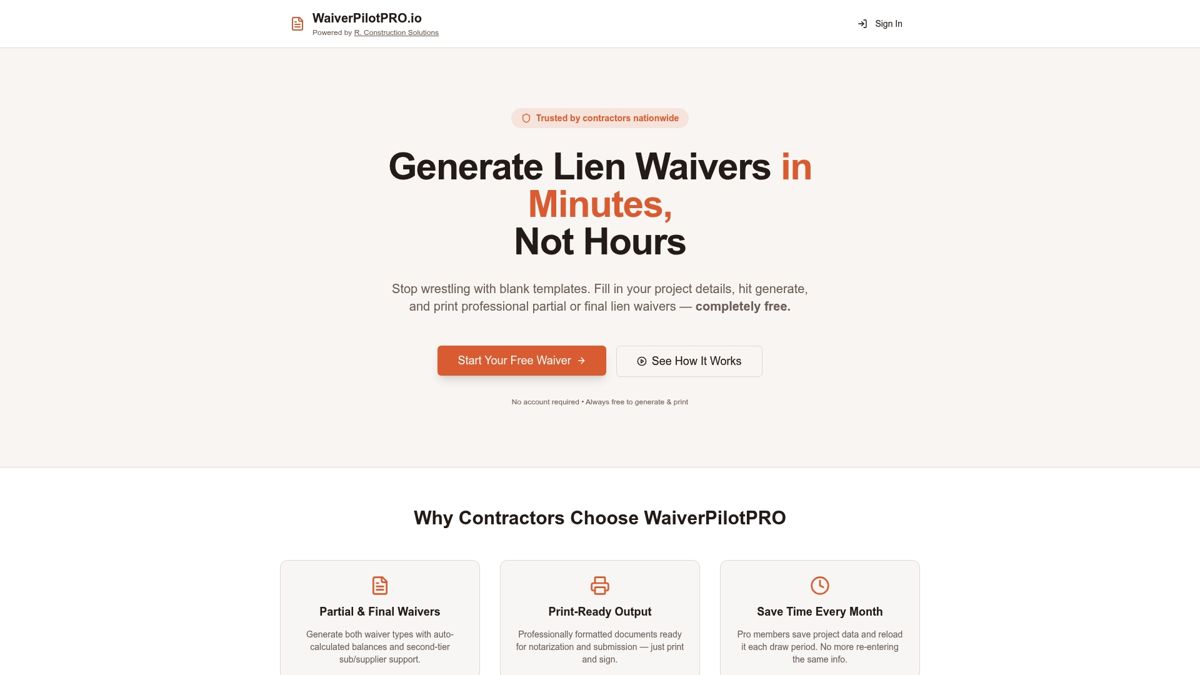
The platform auto-calculates balances, supports multiple subcontractors on a single project, and integrates with construction management software including Procore and QuickBooks. Every document it generates is professional-grade and notarizable, ready for immediate submission. For subcontractors managing tight lien deadlines across multiple projects, that reduction in administrative time is real and measurable. Waiverpilotpro keeps your waivers accurate so your lien rights stay intact.
FAQ
What is the lien period for subcontractors?
The lien period is the legally defined window after last furnishing labor or materials during which a subcontractor must file a mechanics lien. Most states set this window at 60–120 days, though deadlines vary significantly by state.
What happens if I miss the lien filing deadline?
Missing the lien filing deadline permanently eliminates your right to file a mechanics lien on that project. No court can extend or revive an expired lien period, regardless of the validity of your unpaid claim.
Do I need to send a preliminary notice before filing a lien?
Yes, in most states. 37 states require preliminary notices within 20–45 days of first furnishing, and missing that notice deadline voids your lien rights entirely, even if you file the lien itself on time.
What is the difference between a conditional and unconditional lien waiver?
A conditional waiver releases your lien rights only when payment clears, while an unconditional waiver releases rights immediately upon signing. Always use conditional waivers during active draw payments to protect yourself until funds are confirmed.
How long do I have to enforce a lien after filing it?
After recording a lien, you have between 6 months and 2 years to file a foreclosure lawsuit depending on your state. Missing that enforcement deadline voids the lien automatically with no option to renew.