
Why Freelancers Need Professional Waiver Forms
Professional waiver forms are legal agreements that shift responsibility for ordinary negligence from you to your client, giving freelancers a documented defense before a project ever starts. In construction and creative work, where scope creep, cancellations, and payment disputes are routine, understanding why freelancers need professional waiver forms is the difference between absorbing a financial hit and having a legal remedy. These documents are not just paperwork. They are the foundation of a professional contracting practice, and 47 out of 50 US states uphold their enforceability for ordinary negligence claims. That coverage is significant. It means a well-drafted waiver protects you in almost every state where you work.
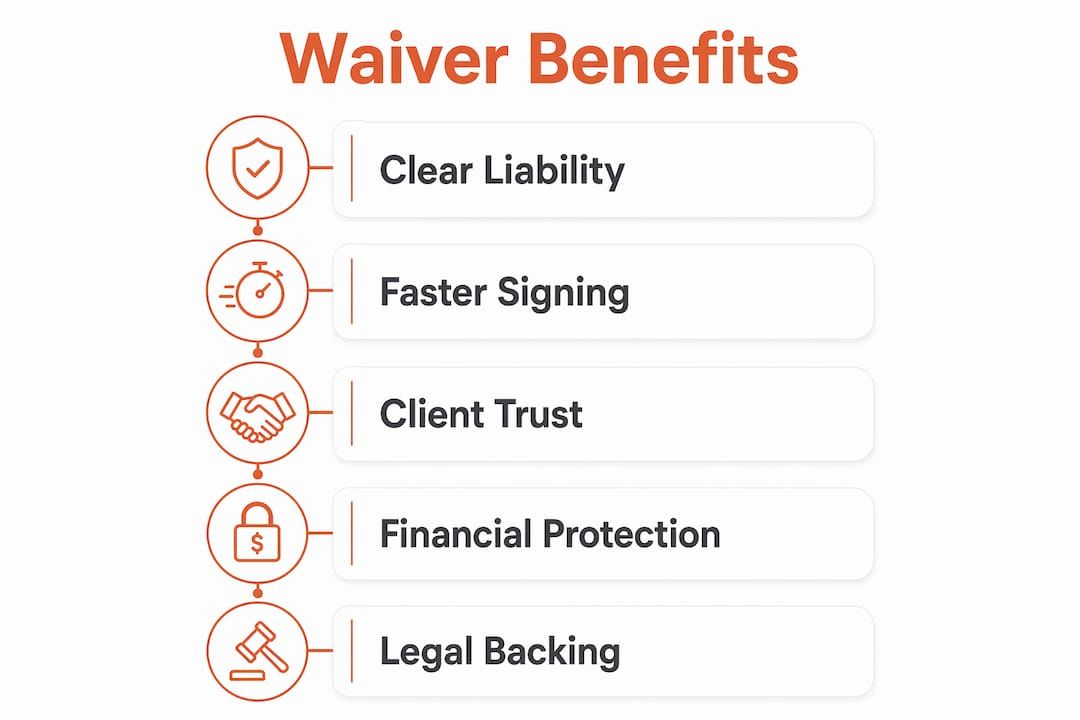
Why freelancers need professional waiver forms
Freelancers face a specific set of legal and financial risks that employees never encounter. You carry no employer liability shield. Every project you take on is a direct exposure to disputes, unpaid invoices, and injury claims.
Professional waiver forms address this by shifting liability for ordinary negligence to the client. That means if a client claims your work caused them a loss due to a common mistake or oversight, a signed waiver gives you an affirmative legal defense. Without one, you are starting every dispute from zero.

The financial stakes are real. Freelancers have lost significant income, such as $800 on a single project, simply by lacking a cancellation clause. A waiver with a kill fee provision of 25–50% of the project value protects you when a client walks away mid-project. That protection is not optional in construction or creative work. It is a baseline.
Waivers also complement your insurance coverage. A certificate of insurance tells a client you carry coverage. A signed waiver tells them exactly what risks they accept. Together, they form a complete risk management position.
What waivers do not cover
Waivers cannot protect you against gross negligence, recklessness, or intentional misconduct. Courts in all 50 states refuse to enforce waivers for those categories of harm. This is a critical distinction. A waiver is not a blank check. It covers the ordinary mistakes that happen on real projects, not willful failures.
Some states also apply stricter enforcement rules. California, for example, limits waiver enforceability in certain service contexts. Knowing your state’s rules before you send a waiver is part of using one correctly.
Pro Tip: Always include the word “negligence” explicitly in your waiver language. Courts in many states require that waivers reference negligence directly to be enforceable. Vague language like “all claims” often fails judicial review.
What should a professional waiver form include?
Effective waivers are short, plain, and specific. Simple contracts focusing on 3–5 critical clauses capture 80% of risk mitigation value at low cost. That finding applies directly to waiver forms. You do not need a 10-page document. You need the right clauses, written clearly.
The core elements every freelancer’s waiver should include are:
- Scope of liability. Define exactly what risks the client accepts. Be specific about the type of work and the conditions under which the waiver applies.
- Cancellation or kill fee. State the percentage of the project fee owed if the client cancels. A 25–50% range is standard practice.
- Indemnification clause. Require the client to cover your legal costs if they file a claim that falls within the waiver’s scope.
- Payment terms. Specify due dates, late fees, and consequences for non-payment. Clear payment terms reduce late payments and increase enforceability.
- Severability clause. This clause preserves the rest of the waiver if a court strikes down one provision. Without it, a single problematic clause can void the entire document.
Plain language matters more than legal formality. Minimalist, plain-language contracts promote faster client signing and reduce confusion. A client who understands what they are signing is far less likely to dispute it later.
Pro Tip: Keep your waiver under two pages. Anything longer signals complexity, slows signing, and increases the chance a client asks for legal review before committing. Short documents close faster.
Jurisdictional nuances matter too. If you work across state lines, your waiver should specify which state’s law governs the agreement. This single clause prevents arguments about which court has jurisdiction if a dispute arises.
How do waivers improve client relationships and project outcomes?
A professional waiver does more than protect you legally. It signals competence. Expert Robert Rogers describes waivers and contracts as a “fortress around your business,” not just paperwork. Clients read that signal correctly. A freelancer who sends a clear, professional waiver before work begins looks organized, serious, and trustworthy.
The practical benefits extend across the entire project lifecycle:
- Reduced disputes. Clear boundaries set in writing prevent the “I thought that was included” conversations that derail projects.
- Faster payment. Payment terms in a signed waiver carry legal weight. Clients pay faster when they know the terms are documented.
- Better cash flow. Cancellation clauses mean you recover partial payment even when a project falls through. That income stability matters for freelancers managing variable workloads.
- Client confidence. Liability waivers provide psychological comfort by setting clear expectations. Clients feel safer working with freelancers who manage risk professionally.
- Faster contract execution. A short, readable waiver gets signed in hours, not days. Dense legal documents sit in inboxes.
In construction, a waiver combined with a lien waiver creates a complete payment protection framework. In creative work, a waiver paired with an intellectual property clause covers both financial and ownership risks. The combination is more powerful than either document alone.
What are the legal limits of liability waivers?
Waivers are affirmative defenses in court, not automatic bars to lawsuits. Courts treat them as one factor among many. This is the most common misconception freelancers carry about waivers. Signing one does not make you lawsuit-proof.
The table below outlines the key legal boundaries every freelancer should understand:
| Scenario | Waiver protection |
|---|---|
| Ordinary negligence claim | Generally enforceable in 47 of 50 states |
| Gross negligence or recklessness | Not enforceable; courts reject these waivers |
| Intentional misconduct or fraud | Never enforceable under any state law |
| Ambiguous or vague waiver language | Likely unenforceable; courts interpret against the drafter |
| Procedural unconscionability | May void the waiver if signing was coerced or uninformed |
Ambiguous language is the most common reason waivers fail. If your waiver says “all claims” without specifying negligence, a court may find it too broad to enforce. Specificity protects you. Vagueness does not.
Jurisdictional differences add another layer. States like Montana and Virginia apply stricter standards to waiver enforceability in service contracts. If you work in those states, consult a local attorney before finalizing your waiver language. For complex or high-value agreements, expert legal review remains the right call even when technology handles routine contract drafting.
How can freelancers integrate waivers into their contracting process?
The best waiver is the one that gets signed before work begins. Timing is everything. Sending a waiver after a project starts weakens its enforceability because courts may question whether the client had a genuine choice.
A practical integration process looks like this:
- Send the waiver with your proposal. Bundle it with your project quote so clients review both at the same time. This normalizes the waiver as part of your standard process.
- Use digital signature tools. Paper waivers create delays and tracking problems. Digital tools generate a signed, time-stamped record that holds up in disputes.
- Track every signed waiver. Organized waiver management protects your legal position. A waiver you cannot produce in court is a waiver that does not exist.
- Combine waivers with scope documents. Attach a clear scope of work to every waiver. This eliminates the “that was not what I agreed to” argument before it starts.
- Review waivers annually. Laws change. A waiver that was enforceable in 2024 may need updated language in 2026 to reflect new state regulations.
For construction freelancers, manual waiver processes cause real project delays. Automation removes that friction. Platforms that auto-calculate balances, support multiple subcontractors, and integrate with project management software cut administrative time significantly. That time savings translates directly into more billable hours.
Free construction forms and templates give you a starting point without requiring you to draft from scratch. Use them as a base, then customize for your specific project type and state.
Key Takeaways
Professional waiver forms are the single most cost-effective legal tool a freelancer can use to protect income, set clear expectations, and reduce the risk of costly disputes.
| Point | Details |
|---|---|
| Waivers shift ordinary negligence | Signed waivers transfer liability for common mistakes from freelancer to client in 47 states. |
| Five clauses cover most risks | Scope, cancellation fee, indemnification, payment terms, and severability capture 80% of risk mitigation value. |
| Plain language closes faster | Short, readable waivers get signed quickly and are less likely to be disputed in court. |
| Waivers have hard legal limits | Courts will not enforce waivers for gross negligence, fraud, or intentional misconduct in any state. |
| Timing and tracking matter | Send waivers before work begins and store signed copies in a system you can access during a dispute. |
What I have learned from watching freelancers skip waivers
The freelancers who skip waivers almost always have the same reason: they do not want to seem difficult. They worry a formal document will scare off a client or signal distrust. I have watched that logic cost people real money, and it never gets easier to watch.
What actually happens is the opposite. A professional waiver tells a client you have done this before. It tells them you take your work seriously enough to protect both parties. Clients who balk at signing a clear, fair waiver are often the same clients who dispute invoices later. The waiver is not just legal protection. It is a filter.
The other pattern I see is freelancers treating waivers as a one-time task. They draft something, use it for two years, and never revisit it. State laws shift. Project types evolve. A waiver built for small creative projects may not hold up for a $50,000 construction subcontract. Your waiver should grow with your business.
My honest advice: keep it short, keep it specific, and send it first. A two-page waiver with five clear clauses will protect you better than a 15-page document no client reads. The goal is a signed document, not an impressive one.
— Rowena
Professional waiver tools built for freelancers
Drafting a waiver from scratch takes time you could spend on billable work. Waiverpilotpro gives construction and creative freelancers a faster path to professional, ready-to-sign documents.
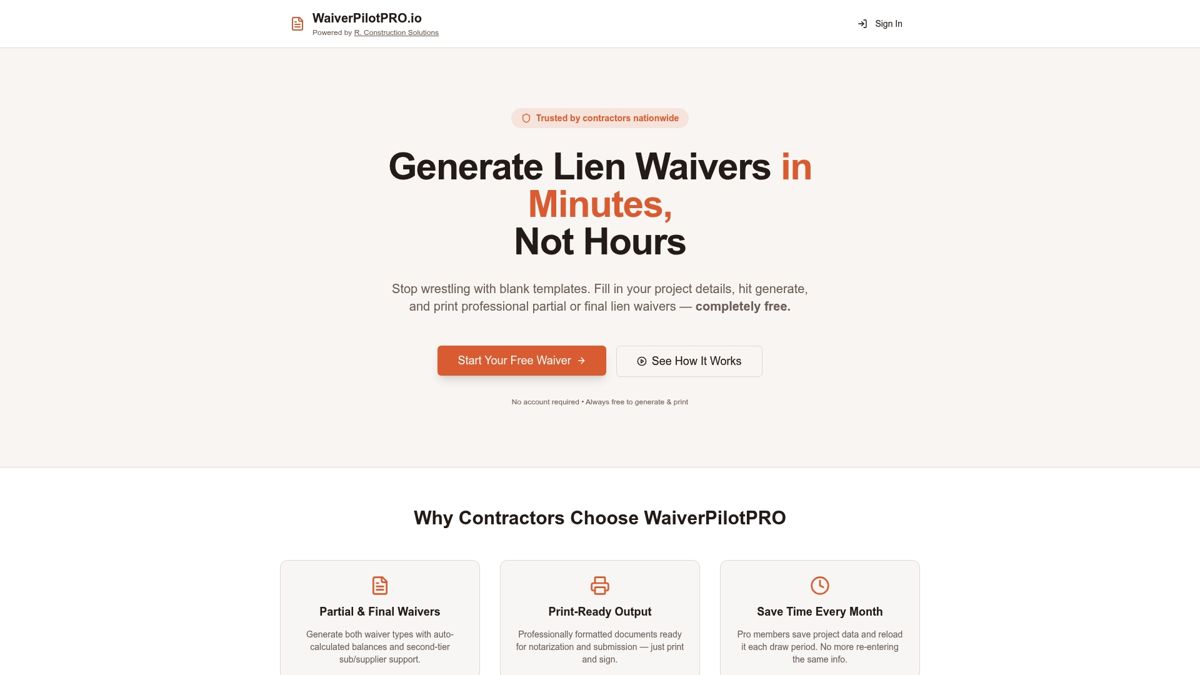
The free lien waiver generator produces both conditional and final waivers without account creation or complex templates. You fill in your project details and get a notarizable document ready for submission. Waiverpilotpro integrates with Procore and QuickBooks, so your waiver workflow fits inside the tools you already use. Auto-calculated balances and multi-subcontractor support reduce the administrative load that slows down payment cycles. If you want to see the full range of downloadable waiver templates, Waiverpilotpro has options in PDF, Word, and Excel formats ready to use today.
FAQ
What is a professional waiver form for freelancers?
A professional waiver form is a legal document that transfers responsibility for ordinary negligence from the freelancer to the client before work begins. It typically includes scope of liability, payment terms, cancellation fees, and a severability clause.
Do waivers protect freelancers from all lawsuits?
No. Waivers are affirmative defenses, not absolute bars to litigation. Courts will not enforce waivers that cover gross negligence, fraud, or intentional misconduct.
How long should a freelancer waiver form be?
A waiver covering 3–5 core clauses captures most of the risk mitigation value and should fit within two pages. Longer documents slow client signing and increase the chance of disputes over interpretation.
When should a freelancer send a waiver?
Send the waiver before any work begins, ideally bundled with your project proposal. A waiver signed after work starts may be challenged on the grounds that the client had no real choice.
Do freelancers in construction need lien waivers too?
Yes. A lien waiver is a specific document that releases a contractor’s right to file a mechanics lien after receiving payment. It works alongside a general liability waiver to create full payment and liability protection on construction projects.