
Title Company Lien Requirements: A 2026 Buyer’s Guide
A title company lien requirement is the obligation to verify that all outstanding liens against a property are fully satisfied or released before closing. This includes mortgage liens, tax liens, mechanic’s liens, and homeowners association assessments. Unresolved liens can halt a closing entirely, expose buyers to inherited debt, and trigger legal disputes over ownership. Understanding what is a title company lien requirement gives you the power to protect your investment before you ever sign at the closing table. The industry term for this process is “lien clearance,” and it sits at the heart of every clean title transfer.
What liens do title companies check and why do they matter?
Title companies search public records to identify every claim attached to a property. The goal is simple: no lien can survive the closing if it clouds the buyer’s ownership rights.
The most common lien types discovered during a title search include:
- Mortgage liens: The existing lender’s claim on the property, which must be paid off at closing from sale proceeds.
- Tax liens: Unpaid federal, state, or local taxes that attach to the property and carry high priority in most jurisdictions.
- Mechanic’s liens: Claims filed by contractors, subcontractors, or suppliers who performed work or supplied materials but were not paid.
- HOA liens: Assessments levied by homeowners associations for unpaid dues or special charges.
- Judgment liens: Court-ordered claims against the seller that attach to any real property they own.
HOA liens often carry “super-priority” status, meaning they can override even a first mortgage in some states. That fact surprises most buyers and many real estate agents. Title companies verify HOA balances through estoppel letters, which are official statements from the association confirming the exact amount owed.
Municipal lien searches go beyond standard public records. They pull data from city and county offices to catch code enforcement fines, utility liens, and special assessments that do not always appear in a standard title search. Skipping this step is one of the most common and costly mistakes in residential transactions.

Pro Tip: Always request a municipal lien search in addition to the standard title search, especially in older neighborhoods where code violations and unpaid utility bills are more likely to appear.
How do title companies require liens to be resolved before closing?
Lien clearance follows a defined sequence. Each step builds on the last, and skipping any one of them creates risk for the buyer.
- Payoff demand letters. The title company contacts each lienholder to request a formal payoff statement. This document states the exact amount needed to satisfy the lien as of a specific date.
- Escrow holdbacks. If a payoff cannot be confirmed before closing, the title company may hold funds in escrow until the lien is paid and released.
- Recorded lien releases. Payment alone does not remove a lien from the public record. A formally recorded satisfaction or release document must be filed with the county recorder’s office. Without it, the lien cloud remains on title.
- Lien release verification. The title company confirms that the recorded release appears in the public record before issuing the title policy.
- Bring-down search. Immediately before closing, the title company runs a final search to catch any new liens recorded after the preliminary title commitment was issued.
The bring-down search is the last line of defense before closing. It catches liens filed in the gap between the initial title search and the closing date. A contractor who files a mechanic’s lien the week before closing, for example, will appear in this search and must be resolved before funds are disbursed.
Unresolved liens cause title companies to refuse title insurance and halt the closing. That refusal is not a technicality. It is the title company’s legal obligation to protect both the buyer and the lender from inherited debt.
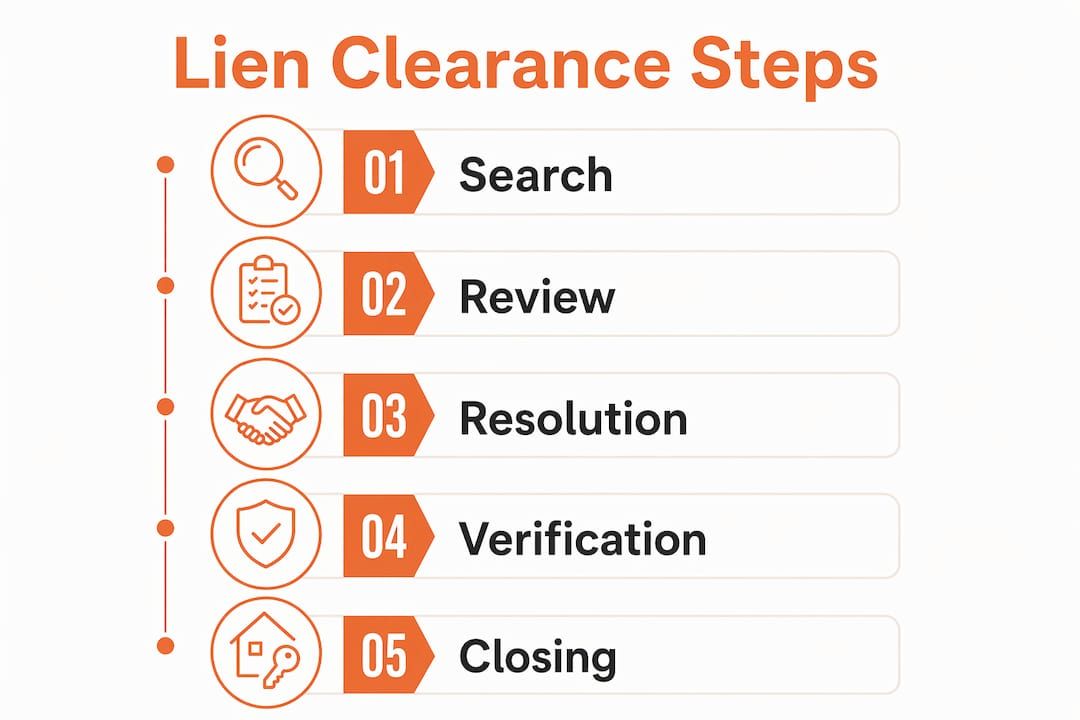
Title companies act as neutral referees, requiring sellers to provide recorded satisfactions. The seller is responsible for curing liens, not the buyer. If a seller cannot produce a recorded release, the closing does not proceed.
Pro Tip: Ask your title company for a copy of the preliminary title commitment as soon as it is issued. Review Schedule B exceptions carefully. Every item listed there is a potential problem that needs resolution before closing.
What is a mechanics lien endorsement and how does it affect lien requirements?
A mechanics lien endorsement is an add-on to a standard title insurance policy that extends coverage to claims filed by contractors and suppliers. Standard owner’s policies exclude mechanic’s liens by default, which leaves buyers exposed when a property has recent construction or renovation history.
Mechanic’s liens are excluded from standard owner’s policies unless the ALTA 9-06 endorsement is added. This endorsement covers existing liens recorded as of the policy date. The ALTA 32-06 endorsement goes further, extending coverage to liens filed after the policy date but relating back to pre-policy construction work. That distinction matters enormously in new construction and recent renovation scenarios.
The cost of adding this protection is real but manageable. The mechanics lien endorsement can increase owner policy premiums by 10–25% but reduce post-closing mechanic’s lien risk by up to 95%. Given that the median cost of title insurance for a standard residential transaction is approximately 0.67% of the purchase price, the endorsement premium is a small price for significant protection.
Key considerations for buyers evaluating mechanic’s lien endorsements:
- Recent renovations: If the seller completed work within the past 12 months, unpaid contractor invoices may still generate valid lien claims.
- New construction: Lien exposure is highest here because multiple subcontractors and suppliers are involved, and not all of them may have been paid.
- Lien waiver collection: Even with an endorsement, title companies and lenders typically require lien waivers from contractors to confirm payment before closing.
- Policy exclusions: Endorsements do not cover liens arising from work ordered by the buyer after closing. Coverage is limited to pre-policy activity.
Buyers frequently overlook exclusions in title commitments related to mechanic’s liens for prior construction work. This oversight can leave them liable for a contractor’s unpaid bill that predates their ownership.
Common misconceptions about title company lien requirements
Several misunderstandings about lien requirements create real financial risk for buyers and sellers alike.
Title insurance is not a debt cleanup service. Many buyers assume the title company will simply pay off any liens it finds. That is not how it works. Title companies enforce strict lien satisfaction from sellers before issuing a policy. The policy protects against defects that were unknown at the time of closing, not debts the seller chose not to pay.
The seller cures liens, not the buyer. Buyers sometimes accept responsibility for resolving liens to save a deal. This is a negotiating error. The seller’s obligation to deliver clear title is a standard contract requirement. Accepting a property with unresolved liens transfers the seller’s problem to you.
Common pitfalls that catch buyers off guard:
- Overlooked HOA assessments: HOA lien priorities can disrupt even standard mortgage lending if assessments are unpaid. Always request a current estoppel letter from the association.
- Ignoring Schedule B exceptions: The title commitment lists every item the policy will not cover. Buyers who do not read this section miss critical exclusions.
- Assuming payment equals release: A seller who pays off a contractor but never records the release leaves a lien cloud on the title. Without a formally recorded release, lien clouds remain on title records and can delay closings or require legal action like a quiet title suit.
- Skipping the municipal lien search: Code violations and utility liens do not always appear in standard title searches. A separate municipal search is the only reliable way to catch them.
How can buyers and real estate professionals ensure compliance?
Compliance with lien requirements starts before you make an offer and continues through the day of closing. A proactive approach prevents last-minute surprises.
Order comprehensive searches early. Request both a full title search and a municipal lien search at the start of the transaction. Early discovery gives everyone more time to resolve issues without delaying the closing date.
Collect lien waivers from contractors. For any property with recent construction or renovation, require the seller to provide conditional and final lien waivers from every contractor, subcontractor, and supplier who worked on the property. A conditional waiver confirms payment is expected; a final waiver confirms payment was received.
Best practices for a clean closing:
- Review the title commitment the moment it arrives, not the day before closing.
- Confirm that every lien listed in Schedule B has a recorded release before the closing date.
- Ask the title company to confirm the bring-down search results before you wire funds.
- Communicate directly with the title officer if you have questions about any exception or endorsement.
Pro Tip: Use a lien waiver generator like Waiverpilotpro to produce professional, notarizable partial and final waivers quickly. Properly formatted waivers reduce the chance of a title company rejecting your documentation at closing.
In construction-heavy transactions, overlapping lien waivers, mechanic’s lien endorsements, and careful document review are the three tools that protect everyone at the table. Skipping any one of them creates exposure that title insurance alone may not cover.
Key Takeaways
A title company’s lien requirement means all liens must be fully satisfied, recorded as released, and verified through a bring-down search before closing can proceed.
| Point | Details |
|---|---|
| Lien clearance is mandatory | All liens must be satisfied and recorded as released before a title company will issue insurance or allow closing. |
| Bring-down search is critical | A final title search run immediately before closing catches new liens filed after the preliminary commitment. |
| Mechanic’s lien endorsements add protection | The ALTA 9-06 and ALTA 32-06 endorsements cover construction-related liens excluded from standard owner’s policies. |
| Sellers cure liens, not buyers | The seller’s contractual obligation is to deliver clear title; buyers should not accept responsibility for resolving seller debts. |
| Lien waivers support compliance | Collecting conditional and final lien waivers from contractors is a practical step that satisfies title company documentation requirements. |
Why lien requirements deserve more attention than they get
Real estate closings move fast, and lien requirements are often treated as a checklist item rather than a substantive risk. That attitude is a mistake I have seen cost buyers tens of thousands of dollars.
The cases that stick with me are not the obvious ones, where a seller had a known tax lien. They are the quiet ones: a renovation completed eight months before listing, a subcontractor who was never paid, and a mechanic’s lien filed two weeks before closing that nobody caught because the buyer’s agent assumed the title company handled everything automatically. The title company does not handle it automatically. It flags it, stops the closing, and waits for someone to fix it.
The 2026 ALTA endorsement landscape has made it easier to get coverage for construction-related lien risk, but endorsements only work if you ask for them. Most buyers do not know to ask. Most agents do not bring it up. The title commitment lands in an inbox, nobody reads Schedule B, and the exceptions become the buyer’s problem after closing.
My honest recommendation: treat the title commitment like a contract, because it is one. Every exception listed there is a risk you are accepting. If you do not understand an exception, ask the title officer to explain it in plain language before you proceed. That conversation takes ten minutes and can prevent a legal dispute that takes years.
— Rowena
Lien waiver tools that support a clean closing
Collecting lien waivers from contractors is one of the most practical steps you can take to satisfy title company lien requirements. The problem is that generating accurate, properly formatted waivers has traditionally required legal templates, manual calculations, and significant administrative time.
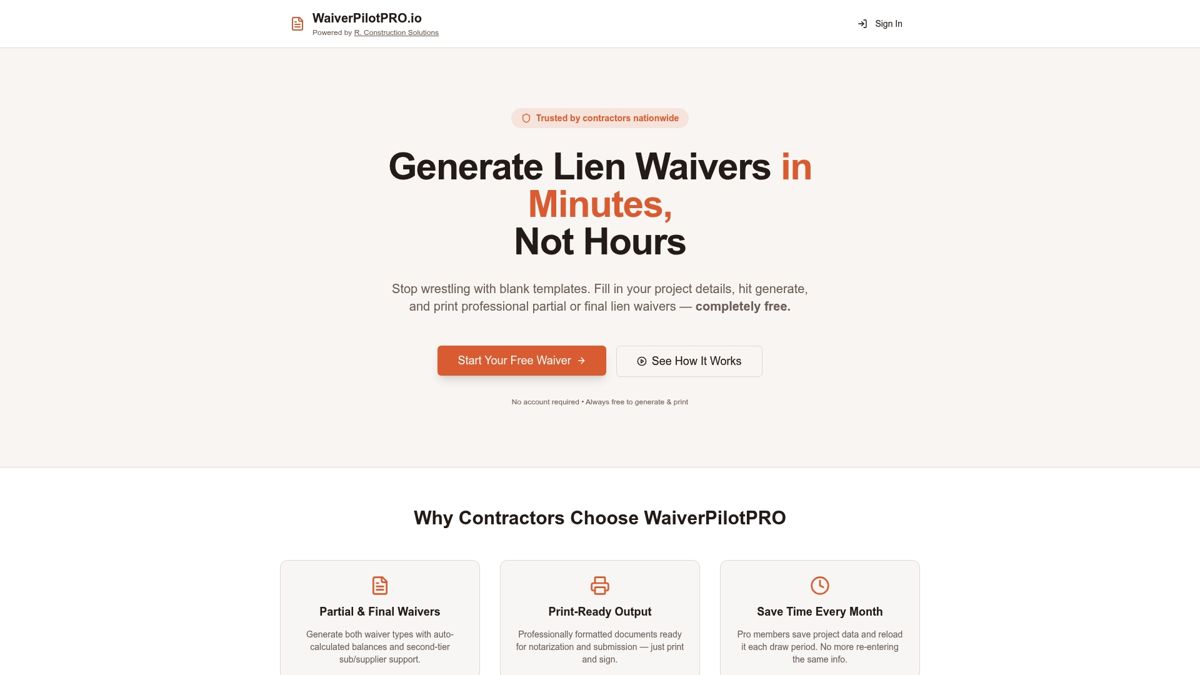
Waiverpilotpro removes that friction. The platform lets contractors and real estate professionals fill in project details and generate both conditional and final waivers at no cost, with auto-calculated balances and professional formatting that meets title company standards. Documents are notarizable and ready for submission. Use the free lien waiver generator to produce compliant waivers in minutes, whether you are managing a single residential closing or coordinating multiple subcontractors on a larger project.
FAQ
What is a title company lien requirement?
A title company lien requirement is the obligation to verify and clear all outstanding liens against a property before closing. The title company will not issue title insurance or allow the transaction to close until every lien is satisfied and recorded as released.
What types of liens does a title search uncover?
A title search typically uncovers mortgage liens, federal and state tax liens, mechanic’s liens, HOA assessment liens, and judgment liens. Municipal lien searches add coverage for code violations and utility liens not always visible in standard public records.
Does paying off a lien automatically remove it from the title?
No. Payment alone does not clear a lien from the public record. A formally recorded satisfaction or release document must be filed with the county recorder’s office before the lien cloud is removed from title.
What is a bring-down search and when does it happen?
A bring-down search is a final title search conducted immediately before closing to catch any new liens recorded after the preliminary title commitment was issued. It is the last verification step before funds are disbursed.
Do I need a mechanic’s lien endorsement if the property had recent renovations?
Yes. Standard owner’s title insurance policies exclude mechanic’s liens by default. If the property has recent construction or renovation history, adding the ALTA 9-06 or ALTA 32-06 endorsement is the most reliable way to protect against post-closing claims from unpaid contractors.