
Construction Payment Dispute Process Explained for Contractors
The construction payment dispute process is a formal procedure that resolves disagreements over payment claims while keeping project cash flow intact. When a payment claim goes unanswered or gets rejected, contractors and project managers need a clear path forward. This guide breaks down the construction payment dispute process explained in plain terms: the procedural steps, key jurisdictional rules, and practical strategies that determine who gets paid and when. Understanding this process is not optional. Procedural deadlines and documentation quality often decide outcomes before anyone evaluates the actual merits of a claim.
What are the typical steps in a construction payment dispute process?
The construction payment dispute process follows a defined sequence. Each step has strict deadlines, and missing one can cost you the right to pursue a claim or force you to pay the full amount claimed.
-
Submit a payment claim. The claimant (contractor, subcontractor, or supplier) serves a formal payment claim on the respondent. The claim must identify the work performed, the amount due, and the contract it relates to. Using standard forms like AIA G702 and G703 creates a clear paper trail from day one.
-
Respondent issues a payment schedule. The respondent must reply with a payment schedule within the required timeframe. In Victoria, Australia, failure to respond within 10 business days makes the respondent liable for the full claimed amount. That single missed deadline can determine the entire outcome.
-
Claimant reviews the response. If the respondent disputes part or all of the claim, the claimant reviews the scheduled amount. If the scheduled amount is less than the claimed amount, a formal dispute exists.
-
Elect a dispute resolution path. The claimant chooses between adjudication, arbitration, mediation, or court action. Adjudication is the fastest and most common first step under prompt payment legislation.
-
Serve a notice of adjudication or formal demand. The claimant formally initiates the chosen process. This document defines the scope of the dispute and must be detailed and precise.
-
Adjudicator or tribunal decides. The decision is issued within the statutory timeframe. Payment of the adjudicated amount is required promptly, even if the respondent intends to challenge the decision later.
-
Enforce or escalate. If the losing party does not pay, the winning party can enforce the decision through court. If either party disputes the adjudication outcome on its merits, they can pursue arbitration or litigation afterward.
Pro Tip: Set calendar alerts for every procedural deadline the moment you serve or receive a payment claim. One missed response window can forfeit your right to dispute or create automatic liability for the full amount.
How do adjudication timelines vary across key jurisdictions?

Adjudication is the dominant tool for resolving construction payment disputes quickly. The rules differ significantly by jurisdiction, and knowing your local regime is non-negotiable.
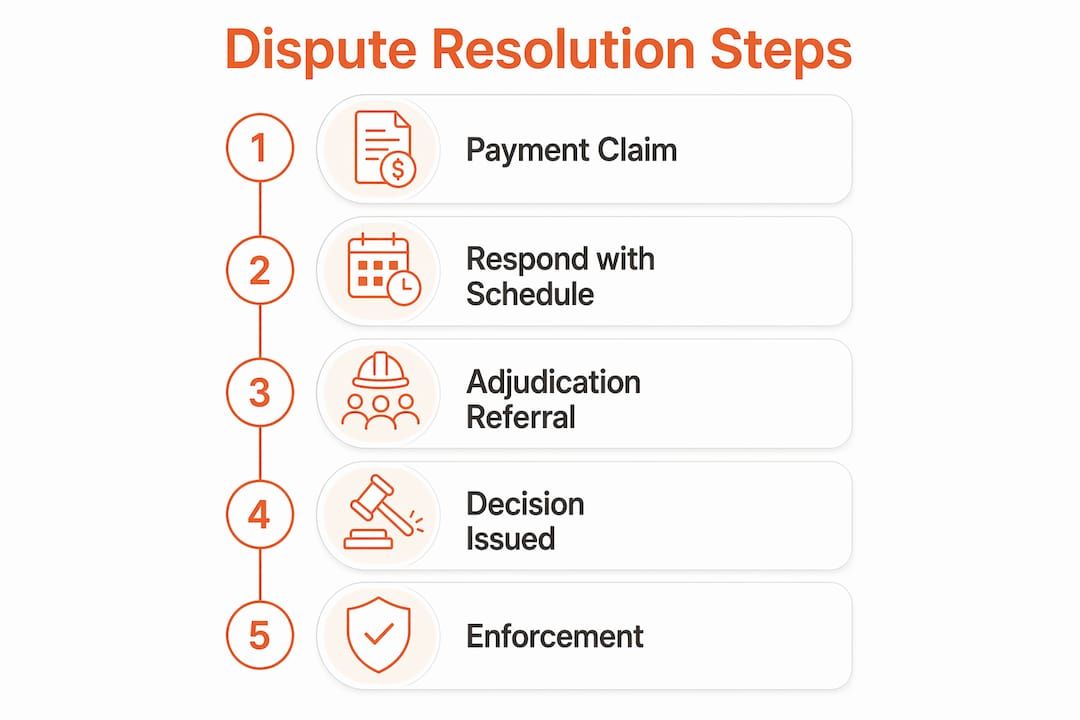
Adjudication operates on a “pay now, argue later” basis. The decision is interim-binding, meaning the losing party must pay immediately while reserving the right to challenge the outcome through arbitration or court later. This principle protects cash flow and keeps projects moving.
| Jurisdiction | Response deadline | Adjudication decision | Key rule |
|---|---|---|---|
| Victoria, Australia | 10 business days to provide payment schedule | 10 business days (extendable by 20 days) | Full liability if no schedule served |
| United Kingdom | 5 days to give notice of adjudication | 28 days from Referral Notice | Binding “pay now, argue later” decision |
| Ontario, Canada | Varies by contract | Within adjudication timetable | 90-day window post-completion to commence |
| British Columbia | Varies by contract | 30-day decision, 15-day payment | Interim-binding under Prompt Payment Act |
| California (SB 440) | 30-day owner response | 60 days for undisputed payment | 2% monthly interest on late payments |
California’s Senate Bill 440, effective in 2026, adds financial pressure through interest penalties. Owners who miss the 30-day response window or the 60-day payment deadline face a 2% monthly interest charge on late amounts. That penalty structure makes procedural compliance a financial priority, not just a legal one.
Ontario’s 2026 amendments set a 90-day limit after contract completion or abandonment to commence adjudication. That window means you must retain all project records through the full post-completion period. Disposing of records early eliminates your ability to contest a dispute.
Pro Tip: If you work across multiple jurisdictions, create a jurisdiction-specific checklist for each project. The deadlines in Victoria and the UK differ enough that a single generic process will cause you to miss critical windows.
What are the other dispute resolution methods for construction payment conflicts?
Adjudication is not the only path. Construction payment disputes can move through several resolution methods, and most contracts require you to attempt earlier steps before escalating.
-
Negotiation. Direct discussion between the parties is the first and least costly step. Most BC construction contracts require negotiation before any formal dispute process begins. A well-documented negotiation attempt also strengthens your position if the dispute escalates.
-
Mediation. A neutral third party facilitates a voluntary settlement. Mediation is confidential, which protects business relationships. It works best when both parties want to preserve a working relationship and are willing to compromise on disputed amounts.
-
Arbitration. A binding decision from a private arbitrator. Arbitration is faster and less expensive than court litigation, but the decision is final and enforceable. Multi-tiered dispute clauses often require negotiation and mediation before arbitration becomes available.
-
Litigation. Court action is the last resort. It offers the most formal enforcement mechanisms but carries the highest cost and the longest timeline. Reserve litigation for disputes where the amount justifies the expense and where other methods have failed.
The method you choose depends on the contract terms, the amount in dispute, and the relationship at stake. Many contracts include a dispute resolution ladder that specifies the exact sequence: negotiation first, then mediation, then arbitration or court. Skipping a required step can invalidate your claim or delay the process significantly.
Negotiation, mediation, arbitration, and litigation each carry different cost, time, and enforceability profiles. Choosing the wrong method for the wrong dispute wastes money and time. Match the method to the dispute size and urgency.
What practical strategies help contractors manage payment disputes effectively?
Strong dispute management is an operational discipline, not a legal emergency response. The contractors who win payment disputes consistently are the ones who treat record-keeping as a daily habit.
Procedural deadlines around payment claims, schedules, and adjudication responses define leverage before anyone evaluates the merits of a claim. A contractor with perfect documentation and a missed deadline loses. A contractor with a weaker claim but perfect procedural compliance often wins. That reality should shape how you run every project.
Good faith dispute rules in California allow a party to withhold up to 150% of the disputed amount, but require payment of all undisputed amounts within 30 days. Knowing this limit prevents you from over-withholding, which creates its own liability. It also tells you exactly how much pressure you can apply legally.
Early referral and demand documents in adjudication and arbitration define the scope of the entire proceeding. An adjudicator can only decide what you put in front of them. A vague or incomplete referral document narrows your options and weakens your position before the process begins.
Split your claims strategically. Many adjudication regimes limit their scope to payment disputes only. Defect claims, delay claims, and quality disputes require separate resolution paths, typically mediation, arbitration, or court. Routing the wrong type of claim to adjudication wastes time and may result in a jurisdictional rejection.
Pro Tip: Build an evidence pack for every project from day one. Include signed contracts, change orders, payment applications, correspondence, and lien waivers. Organize them by date. If a dispute arises, your pack is ready to submit immediately rather than assembled under pressure.
Key Takeaways
The construction payment dispute process rewards procedural discipline: contractors who track deadlines, document every step, and choose the right resolution method consistently outperform those who rely on the strength of their claim alone.
| Point | Details |
|---|---|
| Procedural deadlines are decisive | Missing a response window creates automatic liability or forfeits your right to dispute. |
| Adjudication is the fastest path | Most jurisdictions resolve adjudicated payment disputes within 28–30 days under “pay now, argue later” rules. |
| Jurisdiction rules vary significantly | Victoria, the UK, Ontario, BC, and California each have distinct timelines and penalties you must know before a dispute arises. |
| Documentation determines outcomes | Strong early records and detailed referral documents shape adjudicator scope and dispute leverage. |
| Dispute ladders require sequencing | Most contracts require negotiation before mediation, and mediation before arbitration. Skipping steps can invalidate your claim. |
What I’ve learned about winning construction payment disputes
Most contractors treat a payment dispute as a legal problem. That framing is wrong, and it costs them money. A payment dispute is a timing and records problem first. The legal argument comes second.
I’ve seen contractors with airtight cases lose adjudications because they served a payment claim one day late or failed to retain records past the project completion date. Ontario’s 90-day post-completion window is a perfect example. Contractors who dispose of project files after practical completion lose their ability to adjudicate entirely. The law does not care how strong your underlying claim is if you cannot prove it within the required window.
The “pay now, argue later” principle in UK and BC adjudication is genuinely powerful, but only if you use it correctly. The referral document you submit at the start of adjudication defines the adjudicator’s entire scope. I’ve watched contractors submit vague referrals and then wonder why the adjudicator could not award what they were owed. Specificity in that first document is not a legal nicety. It is the mechanism by which you get paid.
My strongest advice: build your adjudication protocol before you need it. Know your jurisdiction’s deadlines. Assign someone on your team to track payment claim dates. Treat lien waivers and progress payment documentation as dispute-prevention tools, not just administrative paperwork. The contractors who do this rarely end up in formal adjudication at all, because the other party knows the records are clean and the deadlines are tracked.
— Rowena
How Waiverpilotpro supports your payment documentation
Payment disputes often start with a documentation gap. A missing lien waiver, an incomplete payment record, or an unsigned conditional waiver can undermine a claim that should have been straightforward.
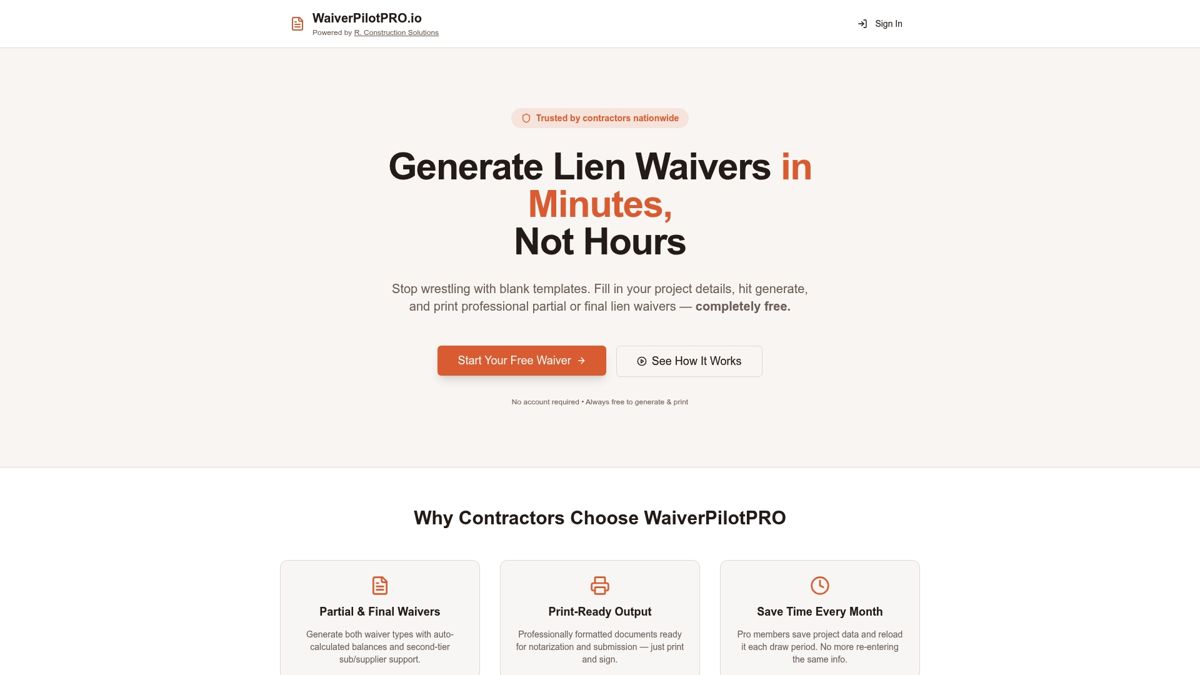
Waiverpilotpro’s free lien waiver generator lets contractors fill in project details and produce both conditional and final waivers in minutes, with no account creation required. The platform integrates with Procore and QuickBooks, so your waivers stay connected to your project records. Auto-calculated balances and multi-subcontractor support reduce the manual work that leads to errors. When a payment dispute arises, your documentation is already organized and ready to submit. Clean records are your first line of defense in any dispute process.
FAQ
What triggers a construction payment dispute?
A payment dispute begins when a respondent either fails to provide a payment schedule or issues a scheduled amount lower than the claimed amount. The claimant then has the right to pursue adjudication or another formal resolution method.
How long does construction adjudication take?
Adjudication timelines vary by jurisdiction. The UK requires a decision within 28 days of the Referral Notice. British Columbia requires a decision within 30 days and payment within 15 days after that.
Can a contractor withhold payment during a dispute?
California law allows withholding up to 150% of the disputed amount under a good faith dispute, but undisputed amounts must still be paid within 30 days. Withholding more than the permitted amount creates separate liability.
What happens if a respondent ignores a payment claim?
In Victoria, a respondent who fails to provide a payment schedule within 10 business days becomes liable for the full claimed amount. Similar automatic liability rules apply in other prompt payment jurisdictions.
Do I need a lawyer to go through adjudication?
Adjudication is designed to be faster and less formal than court. Many contractors handle adjudication with the help of a quantity surveyor or contract administrator rather than a lawyer. However, the referral document must be detailed and precise, so professional support at that stage is worth the cost.